
 Login
LoginEddie rose to great heights
Eddie rose to great heights
28 August 2024
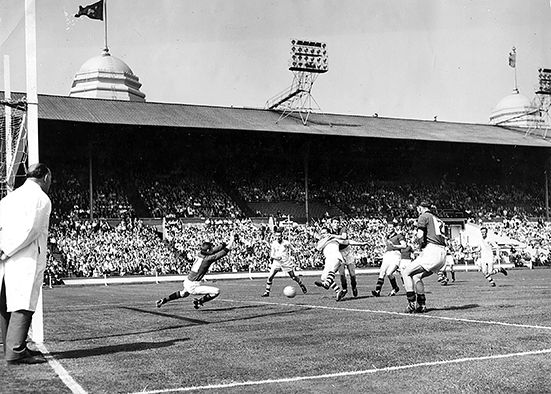
EDDIE McKay was the last line of defence in a Down side renowned for its attacking prowess.
But the Dundrum goalkeeper and the rest of the rearguard were far from unsung heroes.
Eddie, who has died aged 87, won back-to-back All-Ireland medals with Down in 1960 and 1961.
In an interview with the Down Recorder in 2010 – the 50th anniversary of Down’s ground-breaking first All-Ireland triumph, Eddie recalled those far back glory days.
“We had our stars, like Paddy Doherty, Sean O’Neill and James McCartan. Yes, the forwards will win you games, but you need a defence if you don’t want to lose them,” he said.
Eddie made his Down senior debut in June 1957 when he was selected to play against Donegal in the first round of the Ulster Championship.
“I had no previous experience of playing county football at any level and at that time most, if not all, senior players came up through the ranks of minor,
junior or college football,” Eddie explained.
“My recognition came through how I had played for my club team Dundrum in the all-county League and Kinelarty in the Barony League.
It wasn’t the greatest of baptisms. Down were heavily beaten 3-2 to 0-3. Eddie said: “One of the Down supporters’ most famous chants is ‘Up Down.’ Well that day I was definitely on a downer and the only way was up.
“I suppose the defeat came as no great surprise as it seemed to be a low point where Down football was concerned.
“But from that day on Down were on the up and in three years we reached the summit, step by step, by winning the All-Ireland Senior Championship.”
In a career which lasted until 1963, Eddie won two All-Ireland medals, two National League medals, three Ulster Championship medals, three Wembley Cup medals, two Dr McKenna Cup medals, two Lagan Cup medals and one Sr Brendan Cup medal.
He played 14 games at Croke Park, losing only three of them, and three times at the fabled Wembley Stadium.
He was selected three times for the Ulster Railway Cup team and was twice a substitute for Ireland v The Universities.
The change in Down’s – and Eddie’s – fortunes came shortly after that 1957 defeat by Donegal. New methods and a new attitude in the higher reaches of county administration had borne fruit and in 1959 Down were crowned Ulster senior champions for the first time.
Eddie put a lot of the credit for the dramatic improvement in fortunes down to one man.
“Maurice Hayes was the county secretary and for the first time the players were properly looked after.
“Everything was done down to the last detail. We were well fed and we were the first players to have tracksuits. If you had a problem you went to Maurice and he would sort it out. Things like that made such a difference.
“In 1960 we beat Kerry in the National League final, but they were still the kings and to take them on in an All-Ireland final was still the ultimate test.
“When I was a schoolboy it would have been laughable to even think that Down could even reach an All-Ireland final.
“It was the strength of the team that got us there. We could do it all – catch, kick, pass and run – but the big thing was that we played for each other.”
As for the big day itself, Eddie recalled: “I have to say everything passed me by. Croke Park has such a special atmosphere and I seemed to be floating on air.”
Eddie was back at Croke Park the following year and in 1962 took part in Down’s coast-to-coast tour of America. At the time he was living in Downpatrick and working as a mechanic at Stewart’s Motor Works.
“It was an unbelievable experience to go to America and see all the sights and big cities.
“We were given basic expenses, but you never really had to put your hand into your pocket because all the people in America were so generous and wouldn’t let us pay for anything.”
After he stopped playing, Eddie went into team management. He was also one of the founders of the Russell Youth Club in Downpatrick where he was an inspiration to many young people.
Eddie was proud to have been a member of a Down side which changed the face of Gaelic football.
Ulster would never again be the also-rans. As he put it succinctly: “By bring the Sam Maguire over the border we broke the sound barrier.”

- Follow us on:
